Post-production
Sound assistant
Also known as: Sound trainee
What does a sound assistant do?
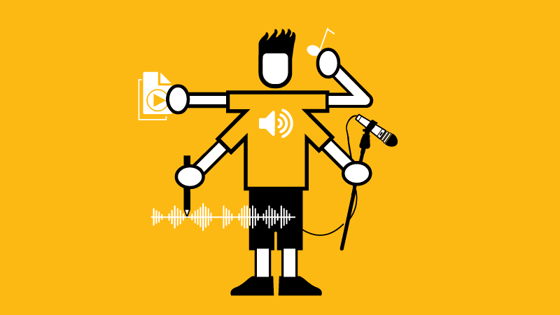
Sound assistants in post-production start off doing similar jobs to a runner – such as keeping the audio suites tidy – and also contribute to the sound department by ingesting material. As they gain experience and sit in on the operations of the dubbing suite, they are able to take on more responsibility.
In time, they may be asked to record the commentary for a documentary or to set up a Foley session. In all these tasks, the sound assistant learns to operate a digital workstation confidently, understand the characteristics of many different types of microphone, and develop a knowledge of acoustics.
Sound assistants are not expected to produce the finished recording, but it’s important they provide high-quality, distortion-free recordings, as their work will be passed on to either the picture editor or sound editor and then to the dubbing mixer, who creates the final mix.
This role is different from being a sound trainee in production because it doesn’t involve capturing sound on location and working with a film crew. However, experience of being a sound trainee in production is a good background for working in post-production, and vice versa.
If a sound assistant is good, they may work their way up to becoming a dubbing mixer or move into a related part of the industry, such as mixing music in a recording studio. It’s a very interesting and varied job and puts you at the heart of the post-production process where you can learn a great deal in a short time.
Watch and read
What’s a sound assistant good at?
- Understanding sound: know how it behaves, how we hear, how sound can be manipulated and distorted
- Using audio equipment software: have a basic knowledge of the audio editing software and an appetite for learning more, know about microphones, recording, playback and editing gear
- Learning by watching and asking: be able to observe what’s happening and ask questions at the appropriate moments
- Attention to detail: be able to work alone, enjoy working with small changes and getting sound exactly right
- Collaboration: be able to work with others, communicate well, pick jobs up and pass work on
Who does a sound assistant work with?
Sound assistants work with other members of the sound team like the sound editor when they are track laying and the dubbing mixer. When supporting the ADR editor, they work with performers, directors and producers recording commentary or additional dialogue.
How do I become a sound assistant?
There are no set routes to becoming a sound assistant. The best thing you can do is immerse yourself in sound and learn as much about it as you can. Then get to know people in the industry and send out your CV.
At school or college:
To study a sound-related course at university, it’s useful to have A-levels or Highers in maths, physics, electronics and music. Or you might want to take a level 3 vocational qualification. Have a look at what your local college offers in those subjects and search training providers such as Pearson and City & Guilds.
Get a degree:
It’s not necessary to have a degree to get into post-production sound, but you might want one in sound engineering or music technology. A degree could help you get into higher-grade jobs such as supervising sound editor. You could also do a first degree in maths or music and then specialise in sound at post-graduate level. Have a look at ScreenSkills’ list of recommended courses in film and TV. We recognise courses with our ScreenSkills Select award where they offer training in the relevant software, dedicated time to building a portfolio and have strong links with the film and TV industries.
Build a portfolio:
Make your own sound. Create a body of work that you can show off to employers. Go to Build your sound portfolio to learn how.
Get an apprenticeship:
Apprenticeships are work with training, so they can be a great opportunity to earn as you learn. You might Find an apprenticeship as a post-production technical operator in a post-production company. This could give you good experience of managing files as well as useful contacts in the post-production industry. From there you can make your way into the sound department.
Check out What’s an apprenticeship? to learn more about apprenticeships and Find an apprenticeship to find one in your region, or approach companies directly. Go to ScreenSkills information and resources.
Search for jobs:
Research post-production houses. Regularly check their websites to see if they are advertising for junior roles. Check out ScreenSkills job boards.
Meet people in the industry:
Go to ScreenSkills’ events, follow your local film office and any local community arts and media organisations and attend their events. Go to how to network well for some tips.
Network online:
Create a LinkedIn profile. See if there’s a Facebook page or other social media group for people making films or videos in your area. Join it and take part. Create a ScreenSkills profile.
Explore ScreenSkills Resources:
ScreenSkills careers information:
The your career hub has a wealth of resources designed to help you start or progress your career.
ScreenSkills e-learning:
ScreenSkills has a suite of free e-learning modules for those who are over 18 which can improve your knowledge. The ScreenSkills Passport modules also prepare you as they are essential for some production roles. Some modules are available for those under 18. For anyone wanting advice about first steps, the Getting into the screen industries modules are very useful.
ScreenSkills skills checklists:
If you would like more detail about the tasks, responsibilities and skills required for many key roles in film and TV drama, children’s TV and unscripted TV you can look at our skills checklists.
You might also be interested in...
Being a sound recordist in unscripted TV. There are also openings in commercials and corporate and music videos. Or you might want to be a sound designer in post-production.
Further resources
- Sound for moving pictures
- The Association of Motion Picture Sound (AMPS)
- Institute of Professional Sound (IPS)
- Community Media Association
- Hospital Broadcasting Association
- Professional Lighting and Sound Association (PLASA)
- The Audio Engineering Society
- Sound and Music
- Eleanor Adler
- Post-production runner: my first job in film
- Bectu (the media and entertainment union)
- Bectu Ratecards
- UK Screen Alliance
- ScreenSkills resources directory