Visual effects (VFX)
Assistant technical director (TD)
Also known as: Junior pipeline TD
What does an assistant TD do?
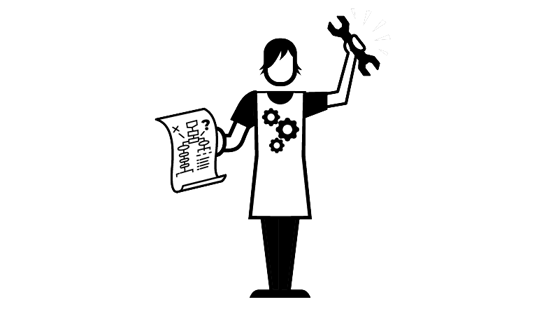
Assistant TDs help to identify and fix problems and make sure everyone in a visual effects (VFX) production pipeline has the tools they need. They have a very good understanding of how VFX pipelines work and of different VFX job roles. Their expertise also includes understanding the software used by VFX artists and the needs and limitations of different departments.
Assistant TDs assist pipeline TDs and other TDs to gather information on the needs of each department. They design solutions for problems that arise and also use coding skills to create small-scale tools needed by the VFX artists. They deal with minor bug reports so that pipeline TDs to deal with bigger problems, such as rendering errors.
Assistant TDs are also responsible for data management, archiving and restoring and tracking data and converting and resizing files where needed. They help to keep the project on schedule. Along with pipeline TDs, assistant TDs will work closely with research and development teams, who design and test any new software.
Watch and read
What’s an assistant TD good at?
- Communication: be helpful and patient and communicate well with a variety of staff at different levels to understand their needs and assist with technical issues, work well as part of a team to develop solutions, take direction from a pipeline TD and escalate issues to them when necessary
- Problem-solving: think analytically to identify problems and come up with creative and efficient solutions, finding new ways to overcome obstacles and achieve a creative vision
- Attention to detail: have a good eye for detail when designing tools and fixing technical issues
- Knowledge of all parts of the pipeline: have a strong understanding of all jobs within the pipeline, their roles, needs, and the challenges they face
- Programming and coding skills: have advanced knowledge of programming in Python and C++ with a very high level of technical ability using a variety of relevant software used across the project such as Maya, Houdini and Nuke
Who does an assistant TD work with?
Assistant TDs work under pipeline TDs as well as with staff from throughout VFX pipelines to understand their issues and find solutions. They also work closely with data input/output technicians to develop solutions to these as well as with supervisors.
How do I become an assistant TD?
Assistant TD is a junior role. To get into it, you need to gain some experience of how VFX pipelines work. You might do this by starting off as a runner. You need to be able to demonstrate good problem-solving skills as well as very strong coding and 3D software skills. Assistant TDs often have a degree in computer science, or you might be able to progress to this role through an apprenticeship scheme.
At school or college:
You can take A-levels or Highers in computing or computer science. Or you might want to take a level 3 vocational qualification in computing or digital art and design. Look at what your local college offers and the qualifications offered by training providers like Pearson, NCC Education and T levels.
Get an apprenticeship:
Apprenticeships are jobs with training. They’re a great opportunity to earn while you learn. You might want to enter the VFX industry through an apprenticeship as an assistant technical director. Have a look at NextGen Skills Academy VFX apprenticeships for school leavers. These involve a lot of learning on the job working in a VFX company.
Check out What’s an apprenticeship? to learn more about apprenticeships and Find an apprenticeship to learn how to find one in your region, or approach companies directly. Go to ScreenSkills information on VFX apprenticeships for the main apprenticeship schemes in VFX.
Get a degree:
VFX companies or studios generally prefer it if you have a degree in graphic design, or another VFX-specific course for this role. Have a look at ScreenSkills’ list of recommended courses and select one in VFX. We recognise courses with our ScreenSkills Select award where they offer training in the relevant software, dedicated time to building a portfolio and have strong links with the VFX industry.
Build a portfolio:
If you intend to get into this role through being a VFX artist, you will need to create a portfolio. Learn how to use, and then experiment with, VFX programs and create a showreel that you can show to admissions tutors or employers. Go to Build your VFX portfolio to learn how. It’s really important to develop your appreciation for VFX. Make sure you’re familiar with what’s out there.
Watch a lot of films:
As well as technical skill, it’s really important to develop an appreciation for VFX and animation. Make sure you’re familiar with what’s out there in the industry.
Search for jobs:
Look at the ScreenSkills jobs board. Research VFX companies you’d like to work for. Go to their websites and check if they are advertising for junior roles the art or pre-production departments. Even if they aren’t, send in your CV and showreel and ask them to bear you in mind for future roles or work experience. Keep looking on job websites too.
Meet people in the industry:
Go to ScreenSkills’ events, follow your local film office and any local community arts and media organisations and attend their events. Go to how to network well for some tips.
Network online:
Create a LinkedIn profile. See if there’s a Facebook page or other social media group for people making films or videos in your area. Join it and take part. Create a ScreenSkills profile.
Explore ScreenSkills Resources:
ScreenSkills careers information:
The your career hub has a wealth of resources designed to help you start or progress your career.
ScreenSkills e-learning:
ScreenSkills has a suite of free e-learning modules for those who are over 18 which can improve your knowledge. The ScreenSkills Passport modules also prepare you as they are essential for some production roles. Some modules are available for those under 18. For anyone wanting advice about first steps, the Getting into the screen industries modules are very useful.
ScreenSkills skills checklists:
If you would like more detail about the tasks, responsibilities and skills required for many key roles in film and TV drama, children’s TV and unscripted TV you can look at our skills checklists.
You might also be interested in…
Being an effects (FX) TD or a lighting TD.